Thursday, January 14, 2010
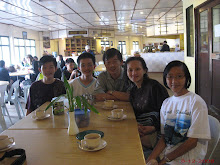
FAMILY GATHERING 2009 at Port Dickson 25/12/09-27/12/09

14th day of year 2010
Monday, December 7, 2009
22 days to my 18th birthday
9/12/09 is the day my younger brother is going to Singapore for further study
My younger brother is going to study in Singapore.He is going to study at NUS High School at Clementi Avenue 1.He is going to study there for four years.He got the Scholarship from NUS high school at the month of JUNE 2009 after the three days of examinations of the paper that set by the high school.Full time he will be studying there.During the long term holidays he will be back.
Thursday, December 3, 2009
13/12/09 StarWalk
Monday, November 23, 2009
Year 2009 Left 38 Days
Thursday, November 19, 2009
Types of Friendship
Some examples are as follows:
Acquaintance: a friend, but sharing of emotional ties isn't present. An example would be a coworker with whom you enjoy eating lunch, but would not look to for emotional support.
Soulmate: the name given to someone who is considered the ultimate, true, and eternal half of the other's soul, in which the two are now and forever meant to be together.
Pen pal: people who have a relationship via postal correspondence. They may or may not have met each other in person and may share either love, friendship, or simply an acquaintance between each other.
Internet friendship: a form of friendship or romance which takes place over the Internet.
Comrade: means "ally", "friend", or "colleague" in a military or (usually) left-wing political connotation. This is the feeling of affinity that draws people together in time of war or when people have a mutual enemy or even a common goal. Friendship can be mistaken for comradeship. Former New York Times war correspondent Chris Hedges wrote:
“ We feel in wartime comradeship. We confuse this with friendship, with love. There are those, who will insist that the comradeship of war is love — the exotic glow that makes us in war feel as one people, one entity, is real, but this is part of war's intoxication. [...] Friends are predetermined; friendship takes place between men and women who possess an intellectual and emotional affinity for each other. But comradeship – that ecstatic bliss that comes with belonging to the crowd in wartime – is within our reach. We can all have comrades.[9] ”
As a war ends, or a common enemy recedes, many comrades return to being strangers, who lack friendship and have little in common.
Casual relationship or "Friends with benefits": the sexual or near-sexual and emotional relationship between two people who don't expect or demand to share a formal romantic relationship.
Boston marriage: an American term used in the nineteenth and twentieth centuries to denote two women that lived together in the same household independent of male support. Relationships were not necessarily sexual. It was used to quell fears of lesbians after World War I.
Blood brother or blood sister: may refer to people related by birth, or a circle of friends who swear loyalty by mingling the blood of each member together.
Cross-sex friendship is one that is defined by a person having a friend of the opposite sex: a male who has a female friend, or a female who has a male friend. Historically cross-sex friendships have been rare. This is caused by the fact that often men would labor in order to support themselves and their family, while women stayed at home and took care of the housework and children. The lack of contact led to men forming friendships exclusively with their colleagues, and women forming friendships with other stay at home mothers. However, as women attended schools more and as their presence in the workplace increased, the segregated friendship dynamic was altered, and cross-sex friendships began to increase.
Open relationship: a relationship, usually between two people, that agree each partner is free to have sexual intercourse with others outside the relationship. When this agreement is made between a married couple, it's called an open marriage.
Roommate: a person who shares a room or apartment (flat) with another person and do not share a familial or romantic relationship.
Imaginary friend: a non-physical friend created by a child. It may be seen as bad behavior or even taboo (some religious parents even consider their child to be possessed by an evil spirit), but is most commonly regarded as harmless, typical childhood behavior. The friend may or may not be human, and commonly serves a protective purpose.
Spiritual friendship: the buddhist ideal of kalyana-mitra, that is a relationship between friends with a common interest, though one person may have more knowledge and experience than the other. The relationship is the responsibility of both friends and both bring something to it.
friendship
Value that is found in friendships is often the result of a friend demonstrating the following on a consistent basis:
* the tendency to desire what is best for the other
* sympathy and empathy
* honesty, perhaps in situations where it may be difficult for others to speak the truth, especially in terms of pointing out the perceived faults of one's counterpart
* mutual understanding
In a comparison of personal relationships, friendship is considered to be closer than association, although there is a range of degrees of intimacy in both friendships and associations. Friendship and association can be thought of as spanning across the same continuum. The study of friendship is included in sociology, social psychology, anthropology, philosophy, and zoology. Various theories of friendship have been proposed, among which are social exchange theory, equity theory, relational dialectics, and attachment styles.
Tuesday, November 3, 2009
Changes of the INTI COLLEGE PENANG calendar
Saturday, September 12, 2009
Hungry Ghost month
Sunday, August 16, 2009
Semester Break 16-8-09 till 31/8/09
Sunday, August 2, 2009
Interested in all these songs?
Dancing queen
Mamma Mia
Money,Money
S.O.S
Living Next Door to Alice
Titanic
You Are Beautiful
Tie a Yellow Ribbon round the Rolled oak Tree
Sometimes When we touch
Top of the World
...
...
Monday, July 20, 2009
Window 7
Saturday, July 4, 2009
JCI YOUTH INTI INTERNATIONAL COLLEGE PENANG
Saturday, June 27, 2009
YEAR 2009
Friday, June 26, 2009
Comparison between INTI COLLEGE PENANG AND INTI COLLEGE SUBANG JAYA
INTI INTERNATIONAL COLLEGE SUBANG JAYA:u can view this website to compare with
httP://www.intisj.edu.my
Sunday, June 21, 2009
Fathers' Day 2009
Saturday, June 13, 2009
INTERVIEW TIPS
2. Act spontaneous, but be well prepared. Be your authentic self, professional yet real. Engage in true conversation with your interviewer, resting on the preparation you did prior to coming to the meeting. Conduct several trial runs with another person simulating the interview before it actually occurs. It's the same as anticipating the questions you'll be asked on a final exam.
3. Set goals for the interview. It is your job to leave the meeting feeling secure that the interviewer knows as much as he or she possibly can about your skills, abilities, experience and achievements. If you sense there are misconceptions, clear them up before leaving. If the interviewer doesn't get around to asking you important questions, pose them yourself (diplomatically) and answer them. Don't leave the meeting without getting your own questions answered so that you have a clear idea of what you would be getting yourself into. If possible, try to get further interviews, especially with other key players.
4. Know the question behind the question. Ultimately, every question boils down to, "Why should we hire you?" Be sure you answer that completely. If there is a question about your meeting deadlines, consider whether the interviewer is probing delicately about your personal life, careful not to ask you whether your family responsibilities will interfere with your work. Find away to address fears if you sense they are present.
5. Follow up with an effective "thank you" letter. Don't write this letter lightly. It is another opportunity to market yourself. Find some areas discussed in the meeting and expand upon them in your letter. Writing a letter after a meeting is a very minimum. Standing out among the other candidates will occur if you thoughtfully consider this follow up letter as an additional interview in which you get to do all the talking. Propose useful ideas that demonstrate your added value to the team.
6. Consider the interviewer's agenda. Much is on the shoulders of the interviewer. He or she has the responsibility of hiring the right candidate. Your ability to do the job will need to be justified. "Are there additional pluses here?" "Will this person fit the culture of this organization?" These as well as other questions will be heavily on the interviewer's mind. Find ways to demonstrate your qualities above and beyond just doing the job.
7. Expect to answer the question, "Tell me about yourself." This is a pet question of prepared and even unprepared interviewers. Everything you include should answer the question, "Why should we hire you?" Carefully prepare your answer to include examples of achievements from your work life that closely match the elements of the job before you. Obviously, you'll want to know as much about the job description as you can before you respond to the question.
8. Watch those nonverbal clues. Experts estimate that words express only 30% to 35% of what people actually communicate; facial expressions and body movements and actions convey the rest. Make and keep eye contact. Walk and sit with a confident air. Lean toward an interviewer to show interest and enthusiasm. Speak with a well-modulated voice that supports appropriate excitement for the opportunity before you.
9. Be smart about money questions. Don't fall into the trap of telling the interviewer your financial expectations. You may be asking for too little or too much money and in each case ruin your chances of being offered the job. Instead, ask what salary range the job falls in. Attempt to postpone a money discussion until you have a better understanding of the scope of responsibilities of the job.
10. Don't hang out your dirty laundry. Be careful not to bare your soul and tell tales that are inappropriate or beyond the scope of the interview. State your previous experience in the most positive terms. Even if you disagreed with a former employer, express your enthusiasm for earlier situations as much as you can. Whenever you speak negatively about another person or situation in which you were directly involved, you run the risk (early in the relationship) of appearing like a troubled person who may have difficulty working with others.
Thursday, June 11, 2009
A GUIDELINE TO MT KINABALU
ABOUT THIS PAMPHLET
This pamphlet was produced in response to a demand for more information about the climb to the summit of Mt. Kinabalu. We have tried to illustrate the plants and animals you are most likely to see, as well as others of special interest.
Many species do not have familiar common names, and in these cases, we have coined a name that is, we hope, descriptive or at least, obvious. Universally-used scientific names have also been included.
lNTRODUCTlON
The Kinabalu Park is famous the world over for the highest mountain in South-East Asia - Mt. Kinabalu, a Vast jagged granite massif rising to 4,101m. (13,455ft.). The mountain is the focal point of the whole Park which covers an area of 754 sq km (291 sq miles), and includes vegetation types ranging from the rich lowland dipterocarp zone through the montane oak. rhododendron, and conifer forests to the alpine meadow plants and stunted bushes of the summit zone an area that probably has one of the richest flora in the world.
The Headquarters is situated on the southern boundary, at an elevation of 1,524m (5,000 ft). Visitor accommodation, restaurants and an exhibit centre are found here as well as the Park offices. It is only a 2 hour drive from Sabah's capital of Kota Kinabalu on a good sealed road and the Park is an ideal spot for day visitors who simply want to get away from it all and enjoy the cool air, as well as those who wish to stay for a few days and climb the mountain or explore the forest trails.
If you are a first-time visitor it is well worth your while to go to some of the free visitor programmes organised by the Park. Regular evening slide/film shows and guided trail walks in the mornings are given by the Park Naturalists at the Park Headquarters.
Nepenthes Villa(Chalets)
Many people who visit the Park come to climb the mountain, a tough Walk that takes a minimum of two days. But why not take your time over it! The climb can be made far more rewarding and enjoyable if you use three days, with two nights at a mountain hut. This way you can take the time to look at what you pass - the birds, the animals, the rocks and the soil, the views and the almost incredibly rich diversity of plant life belonging to one of the most ancient vegetations in the world.
Timpohon Gate - Start of Summit Trail
THE SUMMlT TRAIL
To reach the start of the Summit Trail climbers must drive or walk the 4kms (2 1/2 miles) of the Kamborongoh Road that leads from Mt. Kinabalu Park Headquarters to the PublicWorks Department's Power Station at 1,829m (6,000ft).
The forest on the steep ridge opposite the Power Station is still the montane oak-forest that surrounds the Park Headquarters. Kinabalu has some of the richest oak forests in the world with over 40 different oak species recorded. Here the Summit Trail itself starts, marked at intervals of 5 chains (50 chains = 1 km.; 80 chains = 1 mile), leading past the Power Station and following the crest of a narrow ridge that dips down onto the main slopes of Kinabalu itself. A little further on, there is a waterfall where waterbottles can be filled. This is known as Carson's Falls, named after the first Warden of this Park. Liverworts and mosses grow luxuriantly in the fine spray of water. A Common moss is Dawsonia, one of the largest in the world, that can reach 3ft (1 m) in height. though it is usually much less. Nearby the KINABALU BALSAM (Impatiensplatyphylla) can usually be found, a delicate little herb growing in between rocks at the edge of the path. Rhododendrons are now more common - the SLENDER- LEAVED RHODODENDRON (Rhododendron stenophyllum) is a lovely sight in bloom.
The SMALL MOUNTAlN PlTCHERPLANT (Nepenthes tentaculata) can also be seen by the Sharp-eyed observer grows along the edges of paths, from the Headquarters to as high as 2,439m (8,000ft).
NEW ZEALAND
Language in
The three official languages of
The Maori language has been part of
Maori and English are used throughout the country in various television and radio programs. As with other regions in the world where two cultures have been mixed, English has influenced Maori and Maori has influenced English. A number of words in each language have crossed in to the vocabulary of the other. English has introduced motuka (car) and Maori has replied with taboo (tapu).
Many places in
Kiwi Society & Culture
There can be marked differences between Maori and NZ European (Pakeha) societies and culture. This is particularly apparent when moving in tribal (Iwi) circles. Due to colonisation and tribal differences, there can also be subtle but important variations in protocols. The following sections outline aspects most likely to occur when doing business with tribal groups but can also equally apply to any group that includes Maori.
Kiwi Demeanour
. New Zealanders are friendly, outgoing, somewhat reserved initially yet polite, and enjoy extending hospitality.
. They are quite easy to get to know as they say hello to strangers and will offer assistance without being asked.
. Because they do not stand on ceremony and are egalitarian, they move to a first name basis quickly and shun the use of titles.
. Kiwis dress casually, but neatly.
. Most restaurants do not have dress codes and except in business, dress is decidedly casual.
. Business dress is conservative, although jackets may be removed and shirtsleeves rolled up when working.
Maori demeanour
. Maori are generally friendly and reserved and place great value on hospitality.
. They will generally offer (often to the point of going without) assistance to their guests and will attempt to hide the inconvenience as much as possible.
. Maori will spontaneously launch into speech and song. Even though they may not have met each other, they will know many songs they can sing together and often use these to close or enhance speeches.
. They will often call for visitors to do the same and it would be wise to have 2-3 practised songs from your own country to reply with.
Environmentalism
. Kiwis are environmentally concerned and have a strong desire to preserve their country's beauty.
. One of the major local issues is the importing of predators.
. Border controls are very tight and there are huge fines for importing food or other natural products such as wood, cane etc.
. The local attitude towards the environment is largely influenced by the viewpoint of the indigenous population, the Maori.
. They believe that all things have a 'mauri' - a life force.
. Damage to this life force, or human attempts to dominate it, result in the mauri losing its energy and vitality, which affects the lives of people as well as the resilience of ecosystems.
. Maintaining the mauri of the environment and ecosystem resilience are equally important for sustainable development.
Egalitarianism
. The country has no formal class structure.
. Wealth and social status are not important to Kiwis.
. They take pride in individual achievements and believe that opportunities are available to all.
. As a 'welfare state' unemployment benefits, housing and access to health is all available free of charge to those who can't afford it.
. Maori have a hierarchy especially apparent in formal situations.
. For example, the elder (male or female) is seated in a specific area and will be asked to open or close a meeting. Mostly they are men but not always.
Etiquette and Customs
Meeting and Greeting
. Greetings are casual, often consisting simply of a handshake and a smile.
. Never underestimate the value of the smile as it indicates pleasure at meeting the other person.
. Although New Zealanders move to first names quickly, it is best to address them by their honorific title and surname until they suggest moving to a more familiar level or they call you by your first name.
Maori meeting and greeting
. Maori stand on ceremony and have distinct protocols regarding how visitors should be welcomed and seen off.
. If the business dealings are with a tribal group (Iwi) the welcoming protocols may be practiced through the process of Powhiri – a formal welcome that takes place on a Marae.
. A Powhiri can take between 30 minutes to 2-3 hours depending on the importance of the event.
. It begins by calling the visitors onto the area infront of the traditional meeting house. Visitors should walk as a group and in silence expect if they have a responding caller to reply to the home peoples’ caller (usually an older woman).
. A Powhiri dictates where people sit, in what position in their group, and who speaks.
. In most cases, but not all, you will notice the men are seated forward and only males speak. There is a tension between the men and women on this matter and in a few places this has been resolved and you will see both genders stand to speak. In the interests of not causing friction in your business dealings, always follow the lead of the home people.
. The welcoming speeches are given by the agreed speakers of the home people and always end with the most revered speaker or elder.
. Speeches are given in the Maori language and each one accompanied by traditional song. You may not understand what is being said but you can rest assured it is likely to be from the best orators in the group and often very complimentary.
. The visitors are expected to have at least one speaker reply on their behalf.
. If possible, the speaker should prepare a learned opening in Maori – it is critical that he/she focus on the pronunciation. Mispronounced words often result in whispers and sniggers and is considered disrespectful. It is better to have a very short opening said well, than a long one said badly.
. The speaker’s reply should never be about the detailed purpose of the visit nor should it be to self-promote as this would be considered arrogant.
. The speaker should use the opportunity to briefly show respect to the place that they stand (ie. the location), to the houses (the traditional carved meeting house and dining room are named after ancestors and so are greeted accordingly), to greet the home people, and to explain where his/her group have come from (place is important to Maori). This should be followed by a song from the visitors’ country that the visitors’ group should sing together.
. The Powhiri can be daunting to visitors and can be fraught with traps that may offend. This is why most visitors seek the assistance of a Maori person to ‘guide’ them.
. Once the last elder of the home people has spoken, they will gesture the visitors to come forward in a line to shake hands, kiss (once) on the cheek or hongi (touch noses) with the home people.
. Following this the kitchen is ready to call people in to eat.
. Following the food, the meeting proper can begin.
. While this seems to be a set routine, I have been to many a Powhiri where variations of this occur. It pays to be vigilant and to follow the lead of others, or to discreetly ask questions if unsure.
Gift Giving Etiquette
. If invited to a Kiwi's house, bring a small gift such as flowers, chocolates, or a book about your home country to the hosts.
. Gifts should not be lavish.
. Gifts are opened when received.
Dining Etiquette
. New Zealanders are casual as is reflected in their table manners.
. The more formal the occasion, the more strict the protocol.
. Wait to be told where to sit.
. Meals are often served family-style.
. Keep your elbows off the table and your hands above the table when eating.
. Table manners are Continental -- hold the fork in the left hand and the knife in the right while eating. They will not look askance, however, if you adopt American table manners.
. Indicate you have finished eating by laying your knife and fork parallel on your plate with the handles facing to the right.
Maori Dining Etiquette
. Following a Powhiri, the visitors will be asked to the dining room (a separate building to the carved meeting house) to sit to eat at long tressle tables.
. They should not eat until the food has been ‘blessed’ or an acknowledgement said by an elder of the home people even if the food is getting cold.
. Visitors should try to enable the home people to sit amongst them to chat and get to know them while eating.
. Often, younger people will be serving and older people will be working in the kitchen.
. It is important to realise that in most cases they are working voluntarily and it is appropriate to formally and publicly thank them near the close of the meal before leaving the dining room to begin the meeting. As a result of this, the visitors may be light-heartedly asked to sing.
. To sing a song from your home country would show respect and thanks.